SaveTheFood Campaign Now on Boston Herald’s Plate

May 1, 2016

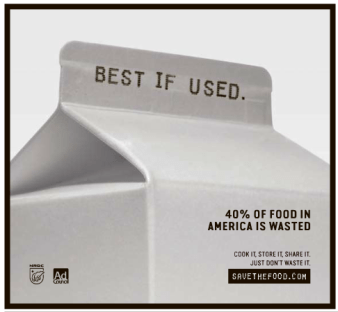
As the hardreading staff recently noted, the Natural Resources Defense Council and the Ad Council have teamed up to run an ad campaign with the theme Save the Food, urging people to reduce food waste.

The partnership has run newspaper ads such as this one . . .
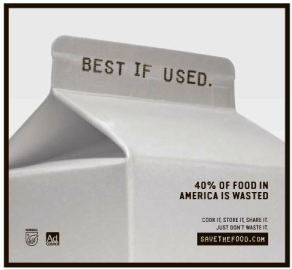
 

Screen Shot 2016-04-26 at 12.01.19 PM


. . . and this one . . .


Screen Shot 2016-04-26 at 12.02.12 PM


. . . both of which ran in the Boston Globe last week.

But not the Boston Herald.

So we sent this email to the Ad Council:

Dear Sir or Madam,

[We] noted with interest the ads you’ve run the past two days in the Boston Globe. But not the Boston Herald.

[We] know the ads you produce virtually always run pro bono, so just wondering: Did you not ask the Herald to run them, or did you ask and the paper decline?

Thank you for your consideration.

Sincerely,
[The hardreading staff]


No reply.

Then, suddenly, this half-page ad ran in yesterday’s hungry local tabloid.


Screen Shot 2016-04-30 at 6.47.07 PM


So: Either the Ad Council finally asked, or the Herald finally agreed to run the ad pro bono.

Coincidence?

We defer to Leroy Jethro Gibbs’s Rule 39  (at 1:52) to answer that.


SaveTheFood Campaign Leaves Boston Herald Hungry

April 26, 2016

From our Local Dailies DisADvantage desk

The Natural Resources Defense Council and the Ad Council have teamed up to run an ad campaign with the theme Save the Food, urging people to reduce food waste.

Here’s the eighth-page ad that ran in yesterday’s Boston Globe Metro section.


Screen Shot 2016-04-26 at 12.02.12 PM


Today, the campaign moved up to the A section of the Globe.


Screen Shot 2016-04-26 at 12.01.19 PM


On its website, the Ad Council elaborates:

While food plays a key role in shaping our identities and it is highly celebrated in American society, each year 40 percent of food in the United States goes to waste, translating to $162 billion lost and wasted water, energy, fertilizers, cropland, and production costs.

In addition to wasting precious resources, nearly all of the food waste ends up in landfills where it decomposes and releases methane, a form of climate pollution that is up to 86 times more potent than carbon dioxide. In fact, food is the single largest contributor to U.S. landfills today. All of this while one in seven Americans do not have a steady supply of food to their tables.

Consumers are responsible for more wasted food than farmers, grocery stores, restaurants, or any other part of the food supply chain . . .


Speaking of waste, the headscratching staff wonders why the Ad Council isn’t also running its ads in the Boston Herald. We’re contacting the group to ask just that, and as always, we’ll keep you posted.