As the hardreading staff has noted over the past week or so, Citgo has been running ads in the Boston Globe (but not the Boston Herald) celebrating the landmark Kenmore Square Citgo sign, which might be endangered when Boston University sells the buildings beneath it.
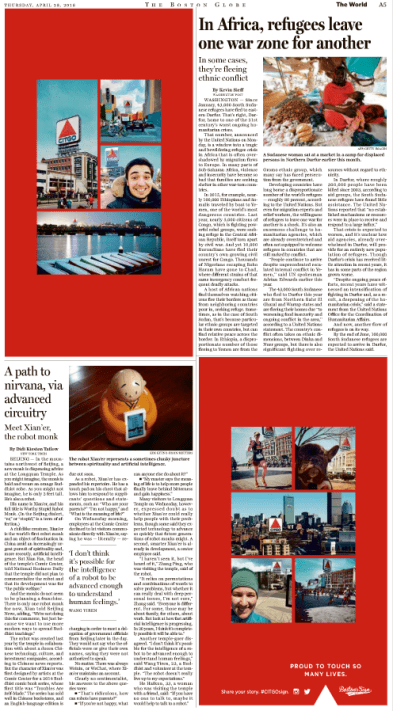
Here’s yesterday’s installment of the feel-good ads.
When the ads first appeared, we contacted Citgo’s public affairs manager Fernando Garay, who said he’d be glad to answer a few questions via email. So we sent him this:
Thanks for getting back to [us] so quickly, Mr. Garay.
A few questions:
Are the Boston Globe ads indeed tied to the uncertain future of the Citgo sign?
What kind of response did you get to the ads?
Have you run ads in other media outlets? Did you consider running these two in the Boston Herald?
Do you have plans to run ads in the future or expand your social media efforts beyond #CITGOsign on Twitter?
Thank you [and etc.].
No reply.
So we queried again.
No reply.
Finally, we sent this last night:
Dear Mr. Garay,
All due respect, but if you weren’t willing to answer [our] questions about the Citgo sign ads in the Boston Globe, why did you say “Please send me your questions via email and I will get back to you with responses”?
For the third time, [our] questions:
Are the Boston Globe ads indeed tied to the uncertain future of the Citgo sign?
What kind of response have you gotten to the ads?
Have you run ads in other media outlets? Did you consider running any in the Boston Herald?
Do you have plans to run ads in the future or expand your social media efforts beyond #CITGOsign on Twitter?
Sincerely,
[The hardreading staff]
Citgo: Proud to touch so many lives. Just not to answer any questions about it.
As the hardreading staff has previously noted, a tree-hugging consortium called Consumers for Sensible Energy has been insensibly spending tens of thousands of dollars on ads in the Boston Globe to little or no effect.
Here’s the group’s ad opposing a new pipeline and Liquified Natural Gas facility for Eastern Massachusetts.
Yesterday, they took their message to the State House steps in Boston, also to little or no effect. The protest got some coverage in the Salem News and the Berkshire Eagle, but a long MassLive story about the Senate’s climate committee hearing yesterday made no mention of the protest. The Boston Globe and Boston Herald had nothing about any of it.
Even worse was the deafening silence on social media: The protest generated exactly one tweet at #StopThePipelineTax, the hashtag the group has spent all that ad money publicizing.
Plug “Consumers for Sensible Energy” into the Twitter search box and you get exactly zero tweets about the protest.
Memo to Consumers for (All Those Dollars and No) Sensible Energy: Next time, just set your money on fire.
The Boston Herald has long been the venue of last resort for full-page ads of the advocacy/corporate image/memorial sort.
As it was yesterday, when the Herald was bypassed by two ads that ran in the Boston Globe.
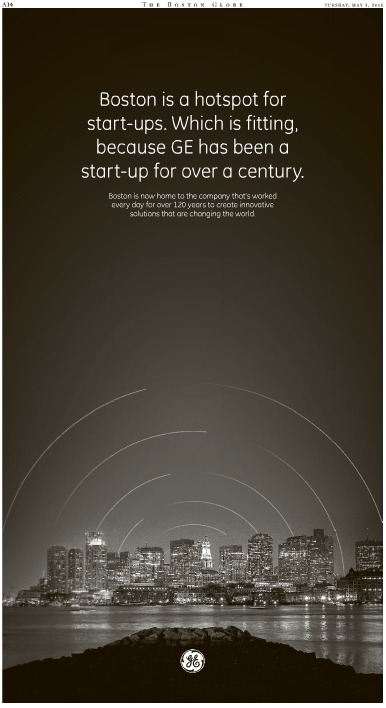
First, this Boston suck-up ad from GE (which in this town stands for Got Everything.)
Then, this Boston Ad Club full-page backpat honoring diversity in a town that has long hampered diversity.
(To be fair graf goes here)
To be fair, yesterday’s Herald did feature this full-page bank ad.
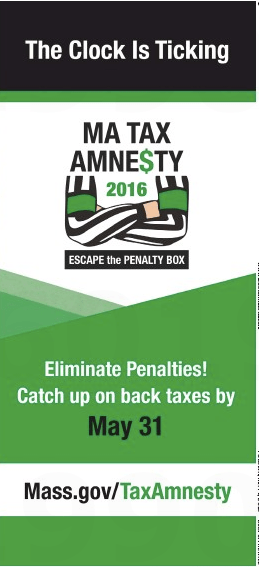
As well as this half-page Massachusetts tax amnesty ad.
Neither of which ran in yesterday’s Globe.
Still, there’s no question that the Herald is an afterthought in the eyes of local advertisers.
Which makes it all the more interesting that the feisty local tabloid seems to enjoy better fiscal fitness than the stately local broadsheet, which is now desperately downsizing (tip o’ the pixel to the redoubtable Dan Kennedy at Media Nation) as it moves from its sprawling Morrissey Boulevard home to cramped quarters in Boston’s financial district.
The objective is to derail Spectra Energy’s Access Northeast project, “which would expand and add new pipeline from West Boylston to Weymouth and down to Acushnet. It calls for the construction of a massive liquefied natural gas facility and new compressor station on the South Coast and South Shore.”
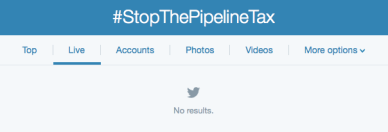
But #StopThePipelineTax has so far been a bust, drawing “No Results” a day after the group’s first ad ran, and only this a day (and another ad) later.
So, to recap: One-half of the responses to this six-figure ad campaign have come from . . . us.
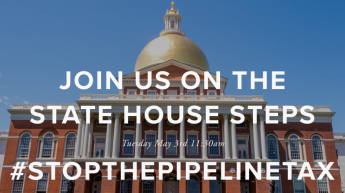
Consumers for (All Those Dollars and No) Sensible Energy has scheduled a State House rally at 11:30 today.
An outfit called Consumers for Sensible Energy ran this ad in the Boston Sunday Globe yesterday (but not the Boston Herald).
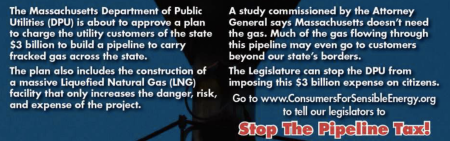
The body copy:
CFSE appears to be a consortium of every local non-profit that’s ever hugged a tree. From their Allies page:
Here’s the issue, according to the group’s website:
Last Week, Kinder Morgan announced that it has suspended its Northeast Energy Direct pipeline project to import fracked gas from Pennsylvania to New England and to connect to export terminals in Canada for shipment overseas.
That was great news, but it is only half the story. There is a second pipeline company proposing to import more fracked gas. And, once again consumers would pay for the $3 billion cost, with a monthly pipeline tax on their bills.
Spectra Energy has proposed its Access Northeast project, which would expand and add new pipeline from West Boylston to Weymouth and down to Acushnet. It calls for the construction of a massive liquefied natural gas facility and new compressor station on the South Coast and South Shore.
Among the Bad News Bearers about the other half of the story was this Globe piece last week.
Weymouth mayor continues talks with Spectra Energy despite local objection
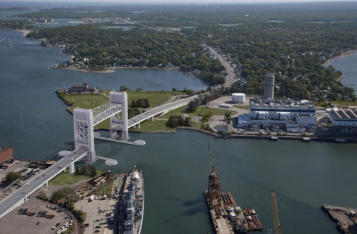
Mayor Robert Hedlund says he’s talking to Spectra Energy about a mitigation package involving millions of dollars for the town if the company builds a natural-gas compressor station near the Fore River Bridge — despite his opposition to the project and calls from local residents to stop the talks.
“It would be irresponsible not to talk with them,” Hedlund said in a phone interview Tuesday. “We’re backed into a corner.”
The offer calls for a $12 million payment in the fall of 2016, followed by another $1 million annually for the next 14 years, and potentially more in property tax adjustments, according to Hedlund’s office.
Hedlund said attorneys for the town advised him that the Federal Energy Regulatory Commission did not appear to be swayed by Weymouth’s concerns that the compressor station posed a safety threat — and would probably approve Spectra’s plans soon. The federal agency has ultimate authority over the project.
Understandably, Consumers for Sensible Energy wants to mobilize the opposition quickly, so its website billboarded this.
Ever diligent, the hardtweeting staff checked #StopThePipelineTax on Twitter and here’s what we found at 12 o’clock this morning.
Just to be clear: 18 hours after their five-figure Boston Globe ad hit the front doors of 220,000 Greater Bostonians, Consumers for (Dollars But No) Sensible Energy had generated up to zero responses on social media.
The partnership has run newspaper ads such as this one . . .
. . . and this one . . .
. . . both of which ran in the Boston Globe last week.
But not the Boston Herald.
So we sent this email to the Ad Council:
Dear Sir or Madam,
[We] noted with interest the ads you’ve run the past two days in the Boston Globe. But not the Boston Herald.
[We] know the ads you produce virtually always run pro bono, so just wondering: Did you not ask the Herald to run them, or did you ask and the paper decline?
Thank you for your consideration.
Sincerely,
[The hardreading staff]
No reply.
Then, suddenly, this half-page ad ran in yesterday’s hungry local tabloid.
So: Either the Ad Council finally asked, or the Herald finally agreed to run the ad pro bono.
Coincidence?
We defer to Leroy Jethro Gibbs’s Rule 39 (at 1:52) to answer that.
Labor Day event scratched, as promoters criticize city’s ‘ridiculous’ demands
Promoters of an IndyCar race in the Seaport this September are peeling out of Boston and will not race in the city.
“The relationship between us and the city is not working,” said John Casey, president of what had been called the Grand Prix of Boston, in a Globe interview Friday. “The relationship is untenable.” . . .
Instead, the promoters will turn to Plan B and try to hold a Labor Day race in a backup city in the Northeast, Casey said. The promoters have had contact with two other cities, he said, one of which is in New England.
“They are both willing to do it without the headaches of Boston,” he said, declining to name the cities.
Mayor Martin J. Walsh was behind the wheel of the Grand Prix of Boston and got burned by its fiery crash, ignoring a series of repeated wrong turns and warning signs that the race would never get off the starting line.
Walsh’s administration spent a year pushing an idea that seemed ludicrous to many Bostonians: hosting a high-speed IndyCar race in a city that can’t even fill potholes or sync up its traffic lights.
No kidding – it’s like Joe Cocker has timed the traffic lights in Boston.
Regardless, here’s Battenfeld’s moneyquote:
Casey gave all the race vendors, consultants and attorneys a similar brusque sendoff, writing: “Thank you for your work. Pencils down” — another way of saying: I’m not paying you any more.
Then Casey let it be known he was taking his speedy race cars to a city that really wanted them: Providence.
Chalk up one more checkered flag for the racy local tabloid.
Casey and his group now will look for another city to host the race. Providence has for years been rumored to be on the verge of an agreement to host an IndyCar race.
Though Emily Crowell, spokeswoman for Providence Mayor Jorge Elorza, said nothing has been finalized.
“IndyCar has not applied for any permits or made arrangements to relocate the race yet,” Crowell said, “but we’re open to having a conversation to see if Providence is the right fit for their event.”
Sounds like Providence is about to have a Hub of a time with the Little Indy That Couldn’t, eh?
But splendid reader Greg Turner beat us to the punch.
Your blog post about the Citgo sign just caught my eye; I’m a BU grad and big fan of the landmark. I clicked around the web and it would appear that Citgo itself is behind the Globe ads.
The hashtag you highlighted matches up with this web page – http://www.bostoncitgosign.com/ – which has the same “Boston’s Sign logo” and the photos that are used in the ad. For example: This one and this one are in both places.
The ad campaign is obviously keeping the “petroleum corporation” part of Citgo in the background!
Well, that got us to contact Citgo’s public affairs manager Fernando Garay yesterday and he said he’d be glad to answer a few questions so we sent him this:
Thanks for getting back to [us] so quickly, Mr. Garay.
A few questions:
Are the Boston Globe ads indeed tied to the uncertain future of the Citgo sign?
What kind of response did you get to the ads?
Have you run ads in other media outlets? Did you consider running these two in the Boston Herald?
Do you have plans to run ads in the future or expand your social media efforts beyond #CITGOsign on Twitter?
Thank you [and etc.].
A day later, no word yet from Mr. Garay. But the ads did run again in today’s Globe (and not – again – in the Boston Herald).
While food plays a key role in shaping our identities and it is highly celebrated in American society, each year 40 percent of food in the United States goes to waste, translating to $162 billion lost and wasted water, energy, fertilizers, cropland, and production costs.
In addition to wasting precious resources, nearly all of the food waste ends up in landfills where it decomposes and releases methane, a form of climate pollution that is up to 86 times more potent than carbon dioxide. In fact, food is the single largest contributor to U.S. landfills today. All of this while one in seven Americans do not have a steady supply of food to their tables.
Consumers are responsible for more wasted food than farmers, grocery stores, restaurants, or any other part of the food supply chain . . .
Speaking of waste, the headscratching staff wonders why the Ad Council isn’t also running its ads in the Boston Herald. We’re contacting the group to ask just that, and as always, we’ll keep you posted.
In the course of covering local events, the Boston dailies often piggyback on one another’s stories, most often without acknowledging that the rival paper got there first. (See, for example, the Boston Globe’s routine drafting off the Boston Herald’s Grand Prix of Boston coverage.)
But sometimes one of the dailies does the right thing. Spoiler alert: It isn’t the Globe.
Page One of yesterday’s Boston Sunday Globe featured this piece about Mayor Martin J. Wiretap.
Walsh is drawn into federal labor probe
Before he was mayor, when Walsh was a labor leader, he was heard on a wiretap saying he had warned a developer using non-union workers. Walsh denies it.
A sweeping federal investigation into allegations of strong-arm tactics by unions has triggered a wave of subpoenas to union leaders, developers, and Boston City Hall staff, bringing scrutiny to Mayor Martin J. Walsh’s administration and his work as a labor leader before taking office in 2014, according to people familiar with the inquiry.
At issue in the investigation is whether labor officials threatened developers and business people who hired nonunion workers on their projects. Walsh, though apparently not an early focus of the probe, became drawn into it through wiretaps on which he was recorded in 2012, saying he had told a development company it would face permitting problems on a planned Boston high-rise unless it used union labor at another project in Somerville, according to people familiar with the tapes.
Well that’s a big story and you knew right off it would be in the Herald today and sure enough it gets a two-page spread.
Nothing unusual there. But what does stand out are the two times the Globe is credited with breaking the story, first in Hillary Chabot’s piece:
Walsh yesterday shook off suggestions that a federal inquiry into labor strong-arming has any connection to his work as mayor. The Boston Globe reported that Walsh as the head of Boston Building Trades Council was heard on a wiretap in 2012 saying he had warned a developer to get union workers on a Somerville project or risk losing Boston permits.
Then a second time in this piece by Jack Encarnacao and Laurel Sweet:
The wiretapped statement was captured during a conversation between Walsh, then-head of the Boston Building and Construction Trades Council, and Laborers Local 22 leader Anthony Perrone, the Boston Globe reported yesterday citing unnamed sources.
Good for you, Heraldniks!
And, hey, you Morrissey Boulevardiers: Take a lesson, wouldja?


 Posted by Campaign Outsider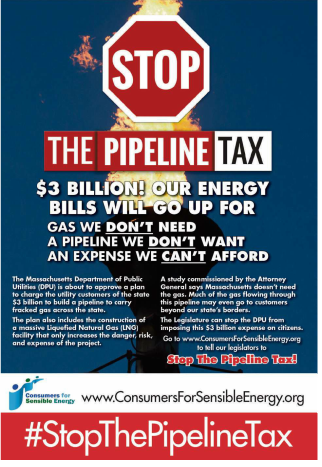











 It's Good to Live in a Two-Daily Town